The lab
The
lab.
Where PDT meets experiment. Visualisations, simulations, software tools and experimental programmes built to explore and test the framework.
Live · Feature
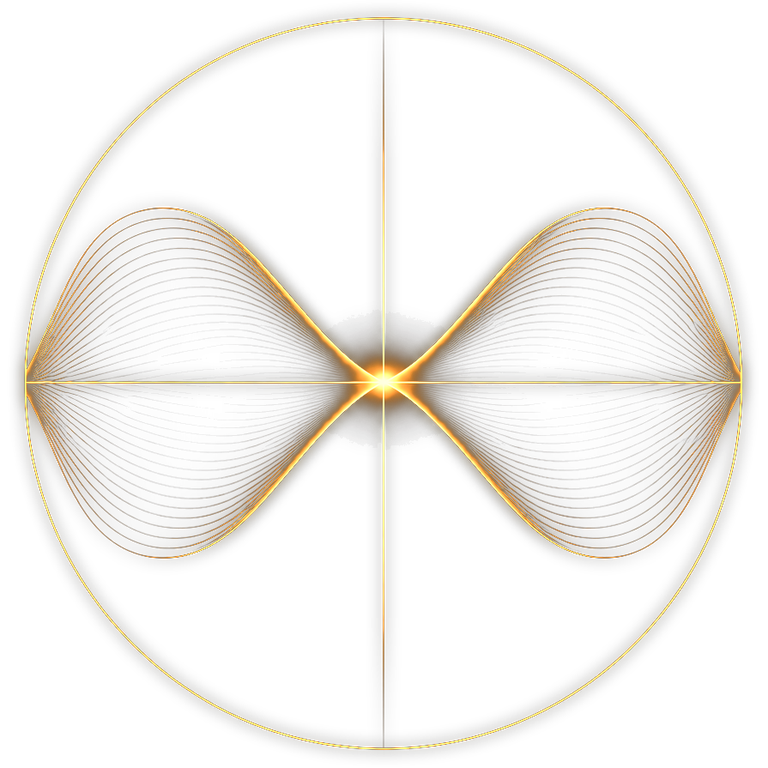
Phase interference field
Six-fold phase primitive resolving into rosettes. Move your cursor to perturb the field.
Section 01 · Visualisations
Visualisations.
Interactive research visualisations exploring phase differential, coherence, relational geometry, transport, and deterministic phase snap. These tools help investigate the conceptual foundations of PDT while providing intuitive insight into the framework's mathematical and physical behaviour.
01
Concentric phase rings
Interactive visualisation of coherent phase propagation across coupled relational domains, illustrating how coherence evolves and redistributes throughout a system.
02
Nested phase shells
Explores hierarchical phase organisation, showing how coherent structures may emerge naturally across multiple physical scales.
03
Relational lattice
Visualises the discrete relational sampling framework used throughout the mathematical development of Phase Differential Theory.
04
Phase differential propagation
Illustrates the evolution and transport of phase differential through a one dimensional relational manifold.
05
Logarithmic phase spiral
Demonstrates the geometric evolution of coherent phase structures and the natural coordinates of phase organisation.
06
Relational symmetry rosette
Explores the six fold relational symmetry investigated within the geometric foundations of PDT.
These visualisations are intended as conceptual and computational research tools. Additional interactive models, numerical simulations, and experimental visualisations will be added as the PDT research programme continues to develop.
Section 02 · Simulations
Simulations.
Numerical simulations form the computational research environment of Phase Differential Theory. Each project investigates how the framework behaves under quantitative modelling and explores whether theoretical predictions remain consistent with measurable physical behaviour. Together they provide an evolving platform for testing, refining, and challenging the PDT research programme.
- In development
Electromagnetic field simulation
Numerical simulation of electromagnetic behaviour emerging from relational phase dynamics, comparing PDT predictions with established electromagnetic phenomena.
- In development
Phase evolution
Numerical modelling of deterministic phase evolution across coupled relational systems.
- In development
Coherence thresholds
Exploring the emergence of critical coherence limits and deterministic phase snap.
- In development
Phase-snap dynamics
Simulation of the transition from coherent evolution to realised physical outcomes.
- Planned
Matter formation
Simulation of stable phase structures associated with particle formation and mass generation.
- Planned
Emergent geometry
Investigating how spatial geometry may emerge from underlying relational phase structure.
- Planned
Phase transport
Exploring the propagation of phase differential through coherent physical systems.
- Planned
Quantum measurement
Modelling coherence evolution, measurement, and deterministic phase snap.
- Planned
Emergent gravity
Investigating gravitational behaviour arising from phase curvature and coherent phase dynamics.
- Planned
Black hole dynamics
Exploring phase locking, information accessibility, event horizons, and gravitational behaviour.
- Planned
Cosmological evolution
Large-scale simulations of phase organisation during the evolution of the observable universe.
- Research
Quantum computing
Exploring coherence-aware algorithms, quantum information processing, and phase-based computational architectures.
- Research
Artificial intelligence
Investigating relational reasoning, phase-inspired inference, adaptive learning, and coherence-based computational systems.
- Research
Data compression
Developing predictive, relational, and phase-inspired compression algorithms with applications extending beyond PDT into scientific and engineering datasets.
The simulation programme continues to evolve alongside the theoretical and experimental research. New computational models, numerical experiments, and software tools will be added as the PDT research programme develops. Every simulation is intended to improve understanding, generate testable predictions, and support independent scientific investigation.
Section 03 · Experiments
Experiments.
The experimental programme explores measurable predictions arising from Phase Differential Theory. Each proposed experiment is intended to test, challenge, or potentially falsify specific aspects of the framework through independent observation and measurement.
- Active proposal
Matter-wave coherence
Testing coherence thresholds in matter-wave interferometry.
- Active proposal
Short-range gravity
Investigating possible deviations in short-range gravitational behaviour and Yukawa-scale interactions.
- Active proposal
Entangled photon phase measurements
Exploring phase-dependent behaviour in entangled photon systems.
- Planned
Quantum measurement studies
Investigating deterministic phase snap through controlled coherence evolution.
- Planned
Decoherence investigations
Studying the transition between coherent evolution and realised physical outcomes.
- Planned
Phase synchronisation
Experimental studies of coherence transport and phase locking in coupled systems.
- Open collaboration
Independent experimental verification
Inviting universities, laboratories, and independent researchers to test the published predictions of PDT using existing experimental techniques.
The experimental programme is intended to evolve alongside the theoretical research. Additional experimental proposals will be published as the framework develops, with all tests designed to be independently reproducible and capable of supporting, refining, or falsifying the theory.
Section 04 · Software
Software.
Software developed to investigate, model, analyse, and test Phase Differential Theory. These tools support theoretical research, computational modelling, experimental analysis, engineering applications, and the exploration of practical technologies inspired by the PDT framework.
- In development
PDT Synchronisation Analyzer
Research platform for analysing coherence, synchronisation, phase drift, and deterministic phase snap within experimental data.
- In development
Coherence Analysis Suite
Software for identifying coherence thresholds, phase locking, phase transport, and critical phase behaviour across complex systems.
- In development
Phase Modelling Engine
Computational environment for modelling relational phase dynamics, emergent geometry, and physical behaviour predicted by PDT.
- In development
Experimental data analysis
Analytical tools for comparing experimental measurements with theoretical predictions and identifying measurable phase signatures.
- Research
Quantum computing tools
Exploring coherence-aware algorithms, quantum information processing, and phase-based computational architectures.
- Research
Artificial intelligence
Investigating relational reasoning, phase-inspired inference, and coherence-based computational systems.
- Research
Data compression
Developing predictive, relational, and phase-inspired compression algorithms based on the principles of Phase Differential Theory.
- Planned
Interactive research platform
A browser-based environment providing access to simulations, visualisations, computational models, and future experimental analysis tools.
The software programme continues to evolve alongside the theoretical and experimental research. New analytical tools, computational models, and open research software will be released as the PDT programme develops and new areas of investigation emerge.
The Lab evolves alongside the Phase Differential Theory research programme. As the framework develops, new simulations, software tools, computational models, experimental projects, and research platforms will be added. Every addition is intended to support open investigation, independent scrutiny, reproducibility, and the continued development of the theory.
Visit the News section for the latest research updates, software releases, experimental developments, and project milestones.
